

| |
|
|
|
|
Restore the 40-Hour Workweek for Campus Workers
What's this all about?
Campus workers, however, rely on their 40-hour workweek to pay their bills, make rent payments, and feed their families. The current financial instability only makes a 40-hour workweek, and the steady income that comes with it, more important. Workers at our University--the ones that keep our residence halls running smoothly--are already feeling the consequences of the hour cuts, which amount to an 8% cut in pay.
Notably, RHC is already understaffed. With the construction of the new South Campus Dorm, the University had promised to hire 3 more maintenance staff, but have so far failed to do so. A cut in hours just increases the amount of work that must be done in a shorter period of time.
In late September, President Zimmer sent a campus-wide email explaining that the budgetary crisis at the University of Chicago was over and that he did not "anticipate seeking any further budget reductions" for the academic year. In the same letter, he even mentioned a systematic expansion of the faculty. Everything, it appeared, had returned to normal. So why are campus staff still working reduced hours and earning reduced wages?
What's Our Stake in This?
Respect for the people who make this campus run. The current campaign for the restoration of a 40-hour workweek is also an opportunity for students to partner with workers on campus. Many workers will say that they are here for the students--to make sure our dorms run smoothly and that we have clean and safe places to live. Many will say that, without us, they wouldn't have a job. But the reverse is just as true. Without workers, like the RHC staff, our University wouldn't function. No University of Chicago employee should have to worry about whether they will be able to pay next month's rent but, unfortunately, this is not the case.
Responsible use of our tuition dollars. How much do you really know about where and how the University spends your money? We've all seen the new cobblestone on the quads and the new garden in front of the Reg. What does this say about the priorities of the University? We, as students, have a right and a responsibility to demand that our tuition dollars go to support the women and men who support us.
Answers to FAQs
Are these workers represented by a union?
Isn't a cut in hours better than lay-offs?
|
|
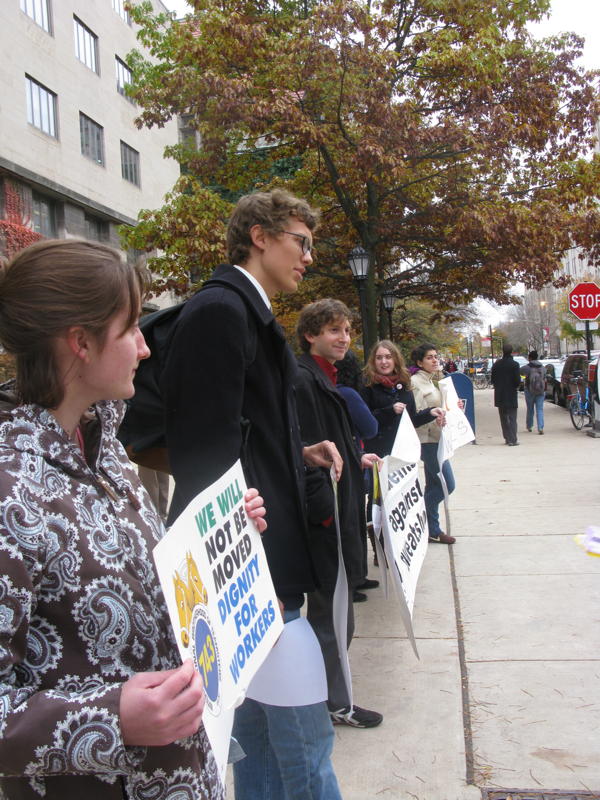 Students and workers from Teamsters Local 743
demonstrate outside of the Administration and distribute
information about the hour cuts to passers-by.
Students and workers from Teamsters Local 743
demonstrate outside of the Administration and distribute
information about the hour cuts to passers-by.
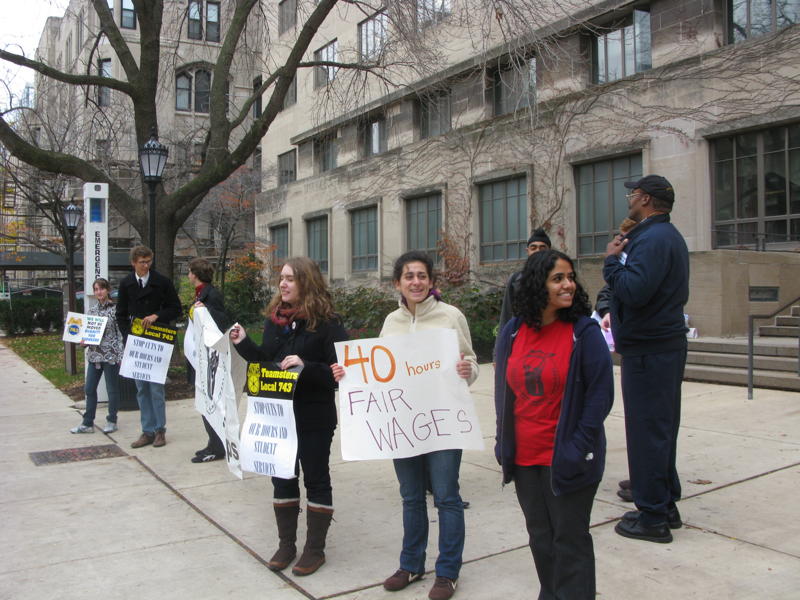
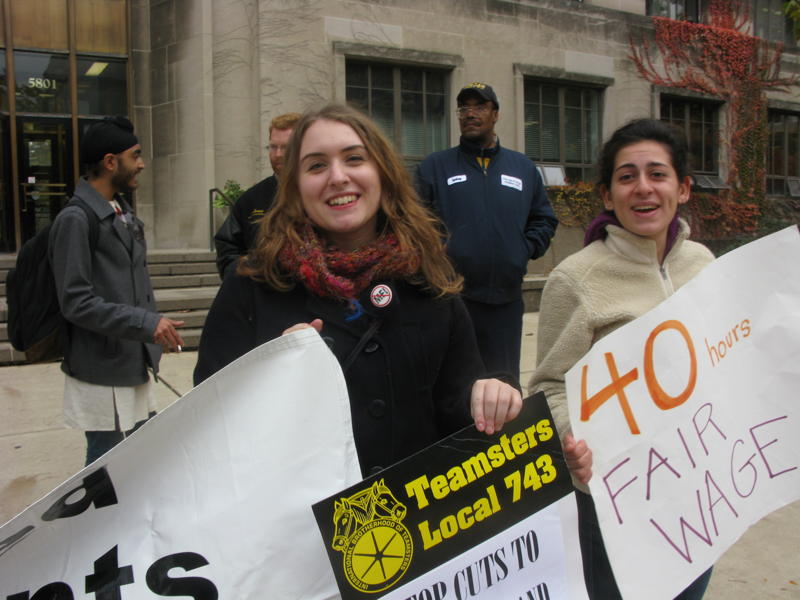
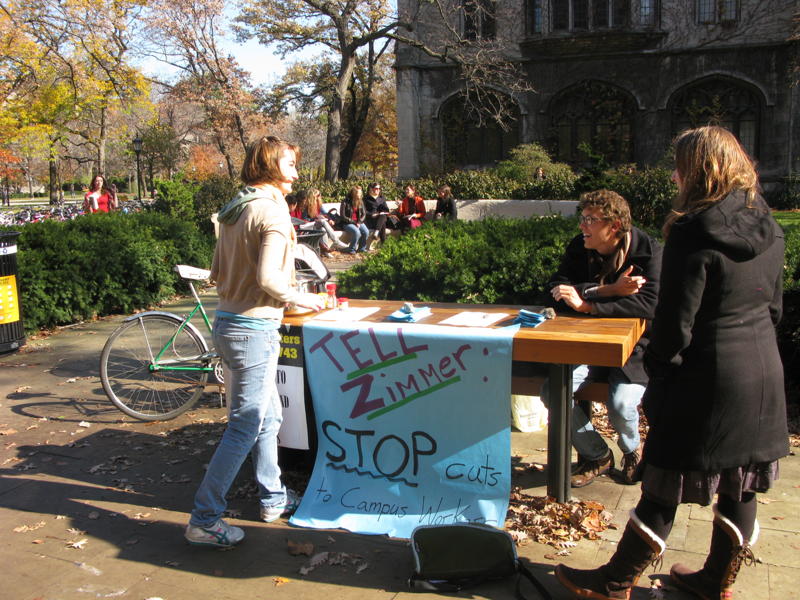 SOUL members table outside of Cobb Hall to get
students to call President Zimmer and tell him
to restore the 40-hour workweek. Students at
partner groups across the country also participated
in the call-in.
SOUL members table outside of Cobb Hall to get
students to call President Zimmer and tell him
to restore the 40-hour workweek. Students at
partner groups across the country also participated
in the call-in.